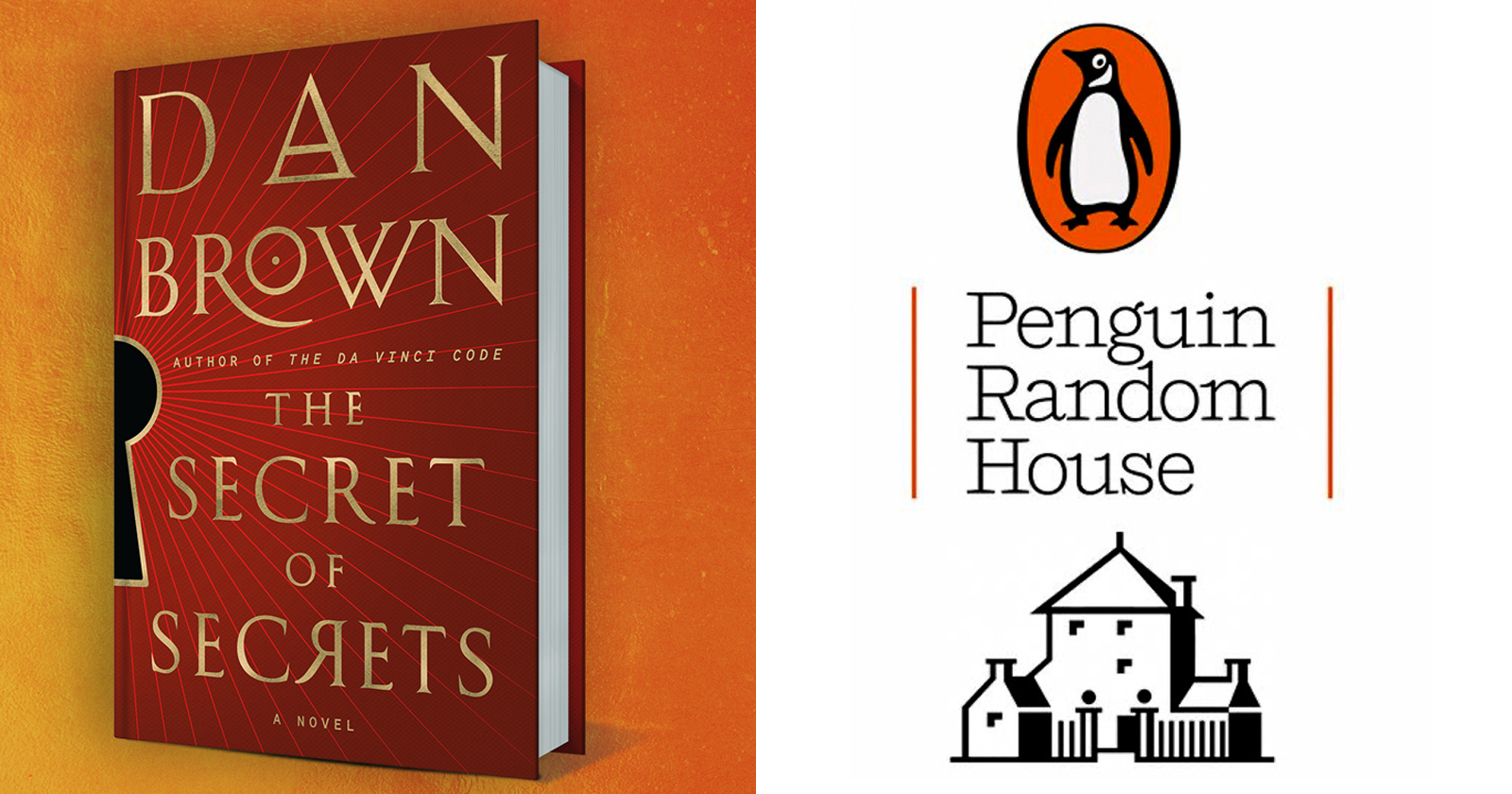
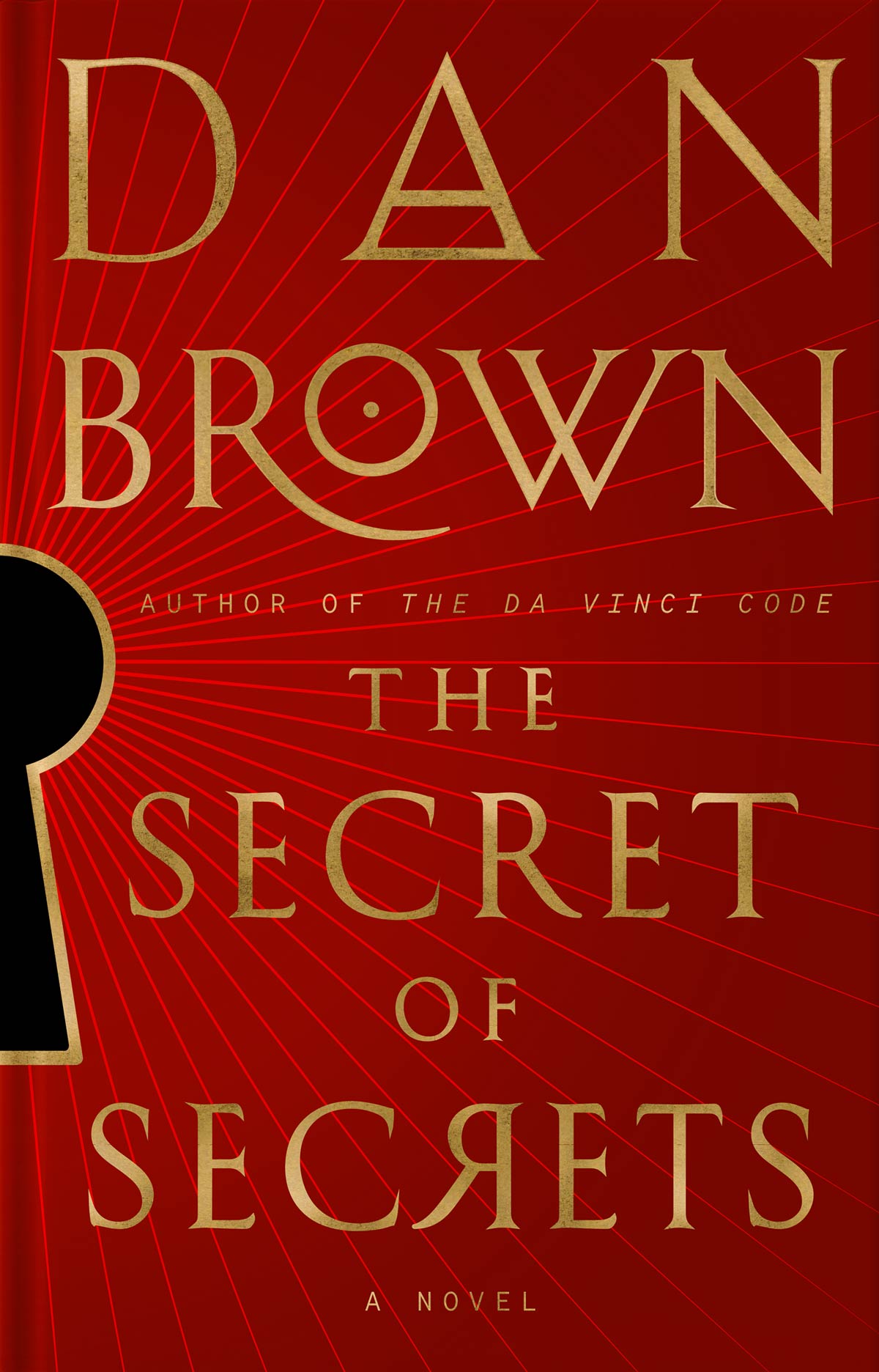
The Secret of Secrets
The world’s most celebrated thriller writer returns with his most stunning novel yet—a propulsive, twisty, thought-provoking masterpiece that will entertain readers as only Dan Brown can do.
Robert Langdon, esteemed professor of symbology, travels to Prague to attend a groundbreaking lecture by Katherine Solomon—a prominent noetic scientist with whom he has recently begun a relationship. Katherine is on the verge of publishing an explosive book that contains startling discoveries about the nature of human consciousness and threatens to disrupt centuries of established belief. But a brutal murder catapults the trip into chaos, and Katherine suddenly disappears along with her manuscript. Langdon finds himself targeted by a powerful organization and hunted by a chilling assailant sprung from Prague’s most ancient mythology. As the plot expands into London and New York, Langdon desperately searches for Katherine . . . and for answers. In a thrilling race through the dual worlds of futuristic science and mystical lore, he uncovers a shocking truth about a secret project that will forever change the way we think about the human mind.
Excerpt from The Secret of Secrets
PROLOGUE
I must have died, the woman thought.
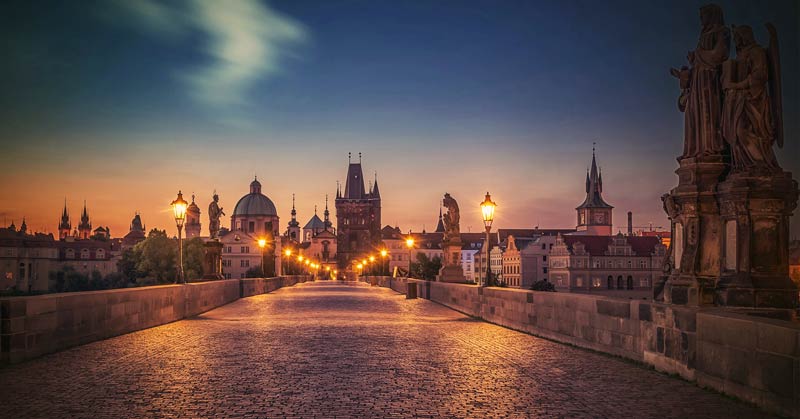
She was drifting high above the spires of the old city. Beneath her, the illuminated towers of St. Vitus Cathedral glowed on a sea of twinkling lights. With her eyes, if she still had eyes, she traced the gentle slope of Castle Hill down into the heart of the Bohemian capital, following the labyrinth of winding streets that lay shrouded in a fresh blanket of snow.
Prague.
Disoriented, she strained to make sense of her predicament.
I am a neuroscientist, she reassured herself. I am of sound mind.
That second statement, she decided, was questionable.
The only thing Dr. Brigita Gessner knew for certain at the moment was that she was suspended over her home city of Prague. Her body was not with her. She was without mass and without form. And yet the rest of her, the real her — her essence, her consciousness seemed to be quite intact and alert, floating slowly through the air in the direction of the Vitava River.
Gessner could recall nothing from her recent past except a faint memory of physical pain, but her body now seemed to consist only of the atmosphere through which she was floating.
The sensation was unlike anything she had ever experienced. Against her every intellectual instinct, Gessner could find only one explanation.
I have died. This is the afterlife.
Even as the notion materialized, she rejected it as absurd.
The afterlife is a shared delusion ... created to make our actual life bearable.
As a physician, Gessner was intimately familiar with death, and also with its finality. In medical school, while dissecting human brains, Gessner came to understand that all those personal attributes that made us who we are-our hopes, fears, dreams, memories-were nothing but chemical compounds held in suspension by electrical charges in our brains. When a person died, the brain's power source was severed, and all of those chemicals simply dissolved into a meaningless puddle of liquid, erasing every last trace of who that person had once been.
When you die, you die.
Full stop.
Now, however, as she drifted over the symmetrical gardens of Wallenstein Palace, she felt very much alive. She watched the snow falling around her — or through her? — and oddly, she sensed no cold at all. It was as if her mind were simply hovering in space, with all reason and logic intact.
I have brain function, she told herself. So I must be alive.
All Gessner could conclude was that she was now in the throes of what medical literature termed an OBE — out-of-body experience, a hallucination that occurred when critically injured patients were resuscitated after clinically dying.
OBEs almost always presented in the same manner — the perception that one's mind had been temporarily separated from its physical body, floating upward and hovering without form.
Despite feeling like real experiences, OBEs were nothing but imagined journeys, usually triggered by the effects of extreme stress and hypoxia on the brain, sometimes in conjunction with emergency room anesthetics like ketamine.
I am hallucinating these images, Gessner assured herself, gazing down at the dark curve of the Vltava River snaking through the city. But if this is an OBE ... then I must be in the process of dying.
Surprised by her own calm, Gessner tried to remember what had happened to her.
I am a healthy 49-year-old woman ... Why would I be dying?
In a blinding flash, a frightening memory materialized in Gessner's consciousness. She now realized where her physical body was lying at this very instant ... and, even more terrifying, what was being done to her.
She was on her back, tightly strapped into a machine she herself had created. A monster stood over her. The creature looked like some kind of primordial man who had crawled out of the earth. His face and hairless skull were coated with a thick layer of filthy clay, cracked and fractured like the surface of the moon. Only his hate-filled eyes were visible behind his earthen mask. Crudely etched across his forehead were three letters in an ancient language.
"Why are you doing this?!" Gessner had screamed in panic. "Who are you?!" What are you?!
"I am her protector," the monster replied. His voice was hollow, his accent vaguely Slavic. "She trusted you ... and you betrayed her."
"Who?!" Gessner demanded.
The monster spoke a woman's name, and Gessner felt a stab of panic. How can he possibly know what I have done?!
An icy weight materialized in her arms, and Gessner realized the monster had started the process. An instant later, an unbearable pinpoint of pain blossomed in her left arm, spreading along her median cubital vein, clawing its way sharply toward her shoulder. "Please, stop," she gasped.
"Tell me everything," he demanded as the excruciating sensation reached her armpit.
"I will!" Gessner frantically agreed, and the monster paused the machine, halting the pain at her shoulder, though the intense burning remained.
Racked with terror, Gessner spoke as quickly as she could through clenched teeth, frantically revealing the secrets she had vowed to keep. She answered his questions, divulging the disturbing truth about what she and her partners had created deep beneath the city of Prague.
The monster stared down at her from behind his thick clay mask, his cold eyes flashing with comprehension ... and hatred.
"You've built an underground house of horrors," he whispered. "You all deserve to die." Without hesitation, he turned the machine back on and headed for the door.
"No...!" she shrieked as the agony seized her anew, surging through her shoulder and into her chest. "Please don't leave … This will kill me!"
"Yes," he said over his shoulder. "But death is not the end. I have died many times."
With that, the monster evaporated, and Gessner was suddenly hovering again. She tried to shout an appeal for mercy, but her voice was muted by a deafening thunderclap as the sky above her seemed to open wide. She felt herself gripped by an unseen force — a kind of reverse gravity — lifting her higher, dragging her upward.
For years, Dr. Brigita Gessner had derided her patients' claims of returning from the brink of death. Now she found herself praying that she could join the ranks of those rare souls who had danced to the edge of oblivion, peered into the abyss, and somehow stepped back from the precipice.
I can't die. I have to warn the others!
But she knew it was too late.
This life was over.
CHAPTER 1 - Excerpt 1
Robert Langdon awoke peacefully, enjoying the gentle strains of classical music from his phone's alarm on the bedside table. Grieg's "Morning Mood" was probably an obvious choice, but he had always considered it the perfect four minutes of music to start his day. As the woodwinds swelled, Langdon savored the uncertainty of not being able to recall quite where he was.
Ah yes, he remembered, smiling to himself. The City of a Hundred Spires.
In the dim light, Langdon surveyed the room's massive arched window, flanked by an antique Edwardian dresser and an alabaster lamp. The plush, hand-knotted carpet was still scattered with rose petals from last night's turndown service.
Langdon had come to Prague three days earlier and, as he had on previous visits, checked into the Four Seasons Hotel. When the manager insisted on upgrading Langdon's reservation to the three-bedroom Royal Suite, he wondered if it was due to his own brand loyalty or, more likely, to the prominence of the woman with whom he was traveling.
"Our most celebrated guests deserve our most celebrated accommodation," the manager had insisted.
The suite included three separate bedrooms with en suite baths, a living room, a dining room, a grand piano and a central bay window with a lavish arrangement of red, white and blue tulips, a welcome gift from the U.S. embassy. Langdon's private dressing room offered a pair of brushed wool slippers monogrammed with the initials RL. Something tells me that's not Ralph Lauren, he thought, impressed by the personalized touch.
Now, as he luxuriated in bed and listened to the music from his alarm, he felt a tender hand touch his shoulder.
"Robert?" a soft voice whispered.
Langdon rolled over and felt his pulse quicken. She was there, smiling at him, her smoky gray eyes still half-asleep, her long black hair tousled around her shoulders.
"Good morning, beautiful," he replied.
She reached over and stroked his cheek, the scent of Balade Sauvage still on her wrists.
Langdon admired the elegance of her features. Despite being four years older than Langdon, she was more stunning every time he saw her — the deepening laugh lines, the faint wisps of gray in her dark hair, her playful eyes and that mesmerizing intellect.
Langdon had known this remarkable woman since his days at Princeton, where she was a young assistant professor while he was an undergrad. His quiet schoolboy crush on her had gone either unnoticed or unrequited, but they'd enjoyed a flirtatious, platonic friendship ever since. Even after her professional career skyrocketed, and Langdon became a high-profile professor known throughout the world, the two of them had kept in casual contact.
Timing is everything, Langdon now realized, still marveling at how quickly they had fallen for each other during this spontaneous business trip.
As "Morning Mood" crescendoed into the full orchestration of the theme, he pulled her close with a strong arm, and she nuzzled into his chest. "Sleep okay?" he whispered. "No more bad dreams?"
She shook her head and sighed. "I'm so embarrassed. That was awful."
Earlier in the night, she had awoken in terror from an exceptionally vivid nightmare, and Langdon had needed to comfort her for nearly an hour before she could get back to sleep. The dream's unusual intensity, Langdon assured her, had been the result of her ill-advised nightcap of Bohemian absinthe, which Langdon had always believed should be served with a disclaimer: Popular during the Belle Epoque for its hallucinogenic properties.
"Never again," she assured him.
Langdon reached over and turned off the music. "Close your eyes. I'll be back in time for breakfast."
"Stay with me," she teased, holding him. "You can skip one day of swimming."
"Not if you want me to remain a chiseled younger man," he said, sitting up with a lopsided grin.
Each morning, Langdon had jogged the three kilometers to Strahov Swimming Center for his morning laps.
"It's dark out," she pressed. "Can't you just swim here?"
"In the hotel pool?"
"Why not? It's water."
"It's tiny. Two strokes and I'm finished."
"There's a joke there, Robert, but I'll be kind."
Langdon smiled. "Funny girl. Go back to sleep, and I'll meet you for breakfast."
She pouted, threw a pillow at him, and rolled over.
Langdon donned his faculty-issue Harvard sweats and headed for the door, choosing to take the stairs rather than the suite's cramped private elevator.
Downstairs, he strode through the elegant hallway that connected the hotel's Baroque riverfront annex with the building's lobby. Along the way, he passed an elegant display case marked PRAGUE HAPPENINGS, featuring a series of framed posters announcing this week's concerts, tours, and lectures. The glossy poster at the center made him smile.
CHARLES UNIVERSITY LECTURE SERIES
WELCOMES TO PRAGUE CASTLE
INTERNATIONALLY ACCLAIMED
NOETIC SCIENTIST
KATHERINE SOLOMON
Good morning, beautiful, he mused, admiring the headshot of the woman he had just kissed upstairs.
CHAPTER 1 - Excerpt 2
Katherine's lecture last night had been standing room only, no small feat considering she had spoken in Prague Castle's legendary Vladislav Hall — a cavernous, vaulted chamber used during the Renaissance to host indoor jousting competitions with knights and horses in full regalia.
The lecture series was one of Europe's most respected and always drew accomplished speakers and enthusiastic audiences from around the world. Last night had been no exception, and the packed hall erupted with applause when Katherine was introduced.
"Thank you, everyone," Katherine said, taking the stage with a confident calm. She wore a white cashmere sweater and designer slacks that fit her flawlessly. "I'd like to begin tonight by answering the one question I am asked almost every day." She grinned and pulled the microphone off its stand. "What the hell is noetic science?!"
A wave of laughter rolled through the hall as the audience settled in.
"Simply stated," Katherine began, "noetic science is the study of human consciousness.
Contrary to what many believe, consciousness research is not a new science — it is, in fact, the oldest science on earth. Since the dawn of history, we have sought answers to the enduring mysteries of the human mind ... the nature of consciousness and of the soul. And for centuries, we have explored these questions primarily through ... the lens of religion."
Katherine stepped off the stage, moving toward the front row of attendees. "And speaking of religion, ladies and gentlemen, I couldn't help but notice that we have in the audience with us tonight a world-renowned scholar of religious symbology, Professor Robert Langdon."
Langdon heard murmurs of excitement in the crowd. What the hell is she doing?!
"Professor," she said, arriving before him with a smile, "I wonder if we might avail ourselves of your expertise for a moment? Would you mind standing up?"
Langdon politely stood, quietly shooting her a you'll-pay-for-this grin.
"I'm curious, Professor ... what is the most common religious symbol on earth?"
The answer was simple, and either Katherine had read Langdon's article on the topic and knew what was coming, or she was about to be very disappointed.
Langdon accepted the microphone and turned to face the sea of eager faces, dimly lit by chandeliers hanging on ancient iron chains. "Good evening, everyone," he said, his deep baritone booming through the speakers. "And thank you to Dr. Solomon for putting me on the spot with no warning whatsoever." The audience clapped.
"All right then," he said, "the world's most common religious symbol? Does anyone have a guess?"
A dozen hands went up.
"Excellent," Langdon said. "Any guesses that are not the crucifix?"
Every single hand went down.
Langdon chuckled. "It's true that the crucifix is extremely common, but it is also a uniquely Christian symbol. There is, in fact, one universal symbol that appears in the artwork of every religion in history."
The audience exchanged puzzled looks.
"You've all seen it many times," Langdon coaxed. "Perhaps on the Egyptian Horakhty stela?"
He paused.
"How about the Buddhist Kanishka casket? Or the famed Christ Pantocrator?"
Silence. Dead stares.
Oh boy, Langdon thought. Definitely a science crowd.
"It also appears in hundreds of the most celebrated Renaissance paintings — Leonardo da Vinci's second Virgin of the Rocks, Fra Angelico's The Annunciation, Giotto's Lamentation, Titian's Temptation of Christ, and countless depictions of Madonna and Child...?"
Still nothing.
"The symbol I'm referring to," he said, "is the halo." Katherine smiled, apparently knowing this would be his answer.
"The halo," Langdon continued, "is the disk of light that appears over the head of an enlightened being. In Christianity, halos hover over Jesus, Mary, and the saints. Going further back, a sun disk hovered over the ancient Egyptian god Ra, and in Eastern religions a nimbus halo appeared over the Buddha and the Hindu deities."
"Wonderful, thank you, Professor," Katherine said, reaching for the microphone, but Langdon ignored her and pivoted away playfully — a touch of payback. Never ask an historian a question you don't want answered fully.
"I should add," Langdon said as the crowd laughed appreciatively, "that halos come in all shapes, sizes and artistic representations. Some are solid gold disks, some are transparent and some are even square. Ancient Jewish scripture describes Moses's head as being surrounded by a 'hila' — the Hebrew word for 'halo' or 'emanation of light.' Certain specialized forms of halos have rays of light emanating from them ... glowing spines that radiate outward in all directions."
Langdon turned back to Katherine with a devious smile.
"Perhaps Dr. Solomon knows what this type of halo is called?" He tipped the mic to her.
"A radiant crown," she said without missing a beat.
Someone did her reading. Langdon brought the mic back to his lips. "Yes, the radiant crown is a particularly significant symbol. It appears throughout history adorning the heads of Horus, Helios, Ptolemy, Caesar ... and even the towering Colossus of Rhodes."
Langdon gave the crowd a conspiratorial grin. "Few people realize this, but the most photographed object in all of New York City happens to be ... a radiant crown." Puzzled looks, even from Katherine.
"Any guesses?" he asked. "None of you has ever photographed the radiant crown that hovers 300 feet above New York Harbor?" Langdon waited as the murmur of revelation grew in the crowd.
"The Statue of Liberty!" someone called out.
"Exactly," Langdon said. "The Statue of Liberty wears a radiant crown — an ancient halo — that universal icon we have used through history to identify special individuals who we believe possess divine enlightenment ... or an advanced state of ... consciousness."
As Langdon handed the mic back to Katherine, she was beaming. Thank you, she mouthed to him as he returned to his seat amid applause.
Katherine walked back onto the stage. "As Professor Langdon has just stated so eloquently, humans have been contemplating consciousness for a long time. But even now, with advanced science, we have trouble defining it. In fact, many scientists are afraid even to discuss consciousness." Katherine glanced around and whispered, "They call it the c-word."
Scattered laughter rippled through the room again.
Katherine nodded to a spectacled woman in the front.
"Ma'am, how would you define consciousness?"
The woman thought a moment. "I suppose ... an awareness of my own existence?"
"Perfect," Katherine said. "And where does that awareness come from?"
"My brain, I guess," she said. "My thoughts, ideas, imaginations ... the brain activity that makes me who I am."
"Very well said, thank you." Katherine lifted her gaze back to the audience. "So can we all start by agreeing on the basics? Consciousness is created by your brain — the 3-pound bundle of 86 billion neurons inside your skull — and therefore consciousness is located inside our heads."
Nods all around.
"Wonderful," Katherine said. "We've all just agreed on the currently accepted model of human consciousness." After a beat, she sighed heavily. "The problem is ... the currently accepted model is dead wrong. Your consciousness is not created by your brain. And in fact, your consciousness is not even located inside your head."
A stunned silence followed.
The spectacled woman in the front row said, "But ... if my consciousness is not located inside my head … where is it?"
"I'm so glad you asked," Katherine said, smiling to the assembled crowd. "Settle in, folks. We're in for quite a ride tonight."
Rock star, Langdon thought as he walked toward the hotel lobby, still hearing the echoes of Katherine's standing ovation. Her presentation had been a dazzling tour de force that left the crowd stunned and clamoring for more. When someone asked about her current work, Katherine revealed she had just put the finishing touches on a book that she hoped would help redefine the current paradigm of consciousness.
Langdon had helped Katherine secure a publishing deal, although he had yet to read her manuscript. She had revealed enough of its contents to leave Langdon enthralled and eager to read, but he sensed she had kept all the most shocking revelations to herself. Katherine Solomon is never short on surprises.
Now, as he neared the hotel lobby, Langdon suddenly recalled that Katherine was slated for an 8 a.m. meeting this morning with Dr. Brigita Gessner — the eminent Czech neuroscientist who had personally invited Katherine to speak at the lecture series. Gessner's invitation had been generous, and yet after meeting the woman last night following the event and finding her insufferable, Langdon now secretly hoped Katherine would oversleep and opt for breakfast with him instead.
Pushing it from his thoughts, he entered the lobby, enjoying the fragrance of the extravagant bouquets of roses that always graced the main entrance. The scene that greeted him in the lobby, however, was far less welcoming.
Two black-clad police officers were stalking intently through the open space, working a pair of German shepherds. Both dogs wore bulletproof vests marked POLICIE and were sniffing around as if searching for ... something.
That doesn't look good. Langdon went over to the front desk. "Is everything okay?"
"Oh, heavens yes, Mr. Langdon!" The immaculately dressed manager nearly curtsied as he rushed out to greet Langdon. "All is perfection, Professor. A minor issue last night, but a false alarm," he assured, shaking his head dismissively. "Just taking precautions. As you know, security is a top priority here at the Four Seasons Prague."
Langdon eyed the policemen. Minor issue? These guys hardly looked minor.
"Are you off to the swimming club, sir?" the manager asked.
"Shall I call you a car?"
"No thanks," Langdon replied, heading for the door. "I'll jog over. I like the fresh air."
"But it's snowing!"
The native New Englander glanced outside at the faint skittering of snowflakes in the air and gave the manager a smile. "If I'm not back in an hour, send one of those dogs to dig me out."
Reviews
Intellectual fuel...[The Secret of Secrets is] a wistful testament to the power of the printed word.
The New York Times
Like so many things that are insanely popular. . . Brown's thrillers look easy to imitate but aren't. He shatters dramatic moments into shiny, irresistible shards... Dan Brown clearly had fun writing his new book. It's contagious.
Washington Post
A master of the brainy, twisty thriller. . . [Dan Brown's] novels move with kinetic energy, his plots are intricate puzzles shrouded in religious iconography [and] ancient cryptography. The Secret of Secrets is perhaps his most ambitious undertaking yet: a dense thriller that is also a meditation on the nature, and the possible future, of human consciousness.
Los Angeles Times
A new Dan Brown book has the ability to make you happy about inclement fall weather so you have an excuse to just stay home and read.... The story is so riveting you'll want to clear your calendar.
USA Today

World
Editions
News